
Noni (Mengkudu): Benefits, Uses, Taste & Precautions
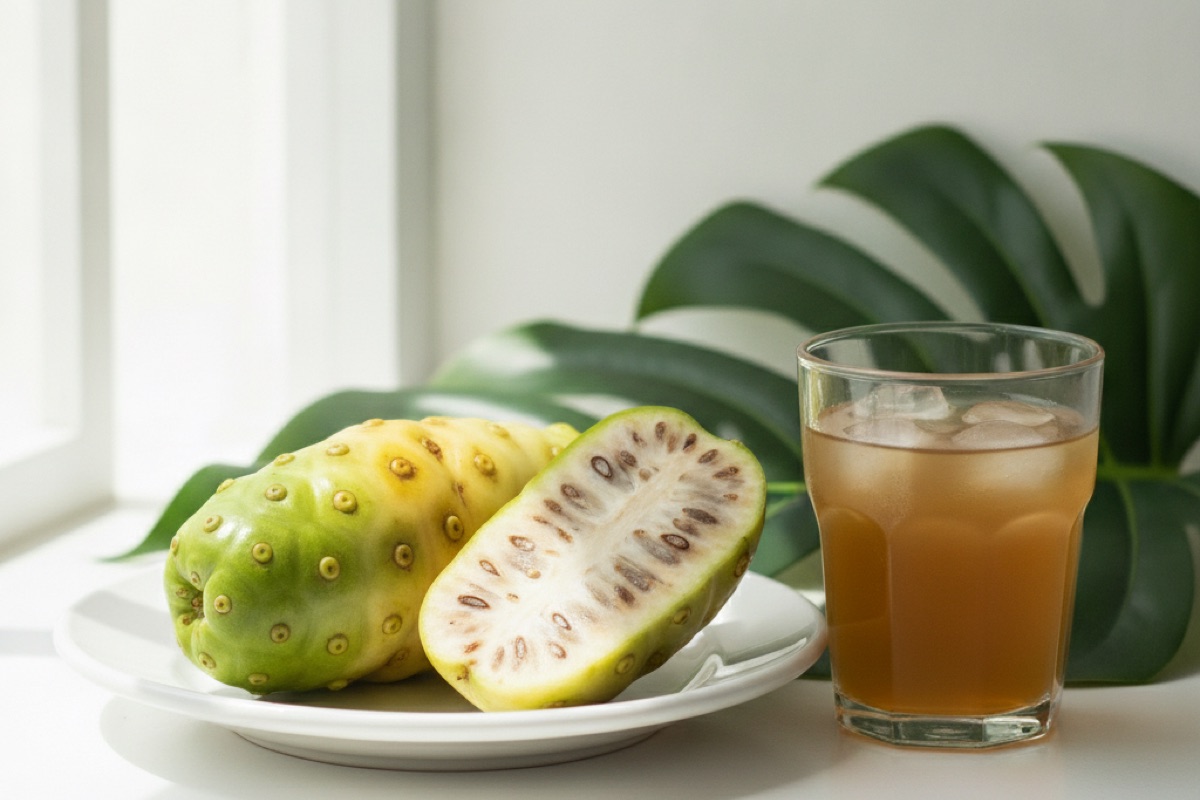
Noni (Morinda citrifolia) is a knobbly tropical fruit that grows across Southeast Asia and the Pacific islands, where it has been used in traditional wellbeing practices for centuries. Across Indonesia and Malaysia it is known as mengkudu, and its juice has a reputation as a hardy, everyday tonic.
What is noni (mengkudu)?
Noni is the fruit of a small evergreen tree that thrives in volcanic, coastal soils. Ripe fruit turns pale yellow and soft, with a famously pungent aroma. Traditional healers in Thailand, Indonesia and the Pacific have long valued the whole plant, but the fruit and its juice are what most people reach for today.
The fruit is rich in plant compounds and antioxidants, including vitamin C, iridoids and polyphenols. This nutrient profile is why noni is often described as a tropical "superfruit" for general wellbeing rather than a cure for any single condition.
Noni juice benefits
Modern interest in noni centres on its antioxidant content and its role in a balanced routine. Traditional use and early research suggest noni may support:
- Everyday immunity and resilience — antioxidants help the body manage oxidative stress.
- General wellbeing and vitality — a common traditional use as a daily tonic.
- Digestive comfort — mengkudu has a long folk history in gut and appetite support.
- Skin and hair — noni extract is popular in topical care as well as juice.
It is worth being realistic: evidence is still developing, and noni is best thought of as a supportive part of a healthy lifestyle, not a treatment.
How Erawadee makes its noni
Our noni comes from ripe fruit grown on Thai farms, where the warm, humid climate lets it develop its full antioxidant profile. For the juice, the fruit is pressed and gently fermented in the traditional way, then bottled as 100% pure juice with nothing added — no sugar, colour or preservatives. The capsules use dried, milled fruit so you get the whole-fruit goodness in a fixed, convenient dose. Because we keep the process simple, the natural aroma stays intact, which is exactly what long-time noni drinkers look for.
Honest note on taste and smell
Let's be candid — noni is an acquired taste. Ripe mengkudu smells sharp and cheesy, and pure noni juice is tangy and slightly bitter. Many people mix it with a little honey, fruit juice or water to make it easier to drink. If the aroma surprises you, that is completely normal and not a sign the juice has spoiled. A cold serving over ice, or a splash blended into a morning smoothie with pineapple or citrus, is one of the easiest ways to make noni part of your day without fighting the flavour.
How to take noni juice and dosage
Noni juice is usually taken in small amounts. A common approach is 15–30 ml (about 1–2 tablespoons) once a day, ideally on an empty stomach in the morning, diluted in water or juice if you prefer. Start low to see how your body responds, and keep an opened bottle refrigerated.
At Erawadee we offer noni in two convenient forms: 100% Noni Juice 500ml, a pure pressed juice with nothing added, and No.45 Noni capsules for those who would rather skip the taste entirely. Both are made from ripe Thai-grown fruit.
Side effects and who should avoid noni
Noni is generally well tolerated in food amounts, but a few cautions matter:
- Kidney conditions: noni is high in potassium. If you have kidney disease or are on a potassium-restricted diet, avoid noni or speak to your doctor first.
- Medication interactions: because of its potassium content, use caution if you take potassium-sparing diuretics, ACE inhibitors or other blood-pressure medicines. Noni may also interact with blood thinners (warfarin).
- Liver concerns: rare reports link concentrated noni to liver issues; anyone with liver disease should be cautious.
- Pregnancy and breastfeeding: not recommended without medical advice.
Herbal supplements support wellbeing and are not a substitute for professional medical advice.
Frequently asked questions
What are the main benefits of noni juice?
Noni is valued for its antioxidants and traditional use as a daily wellbeing tonic that may support immunity, digestion and general vitality. It is a supportive food, not a medicine.
Is mengkudu the same as noni?
Yes. Mengkudu is the Indonesian and Malay name for the same fruit, Morinda citrifolia, known in English as noni.
Why does noni juice taste and smell so strong?
Ripe noni naturally has a pungent, cheesy aroma and a tangy, slightly bitter flavour. This is normal. Mixing it with honey, water or fruit juice makes it much easier to enjoy.
How much noni juice should I drink per day?
A typical serving is 15–30 ml (1–2 tablespoons) once daily, preferably in the morning. Start with a smaller amount and increase gradually.
Who should not take noni?
People with kidney disease or on potassium-restricted diets, those on blood-pressure medication or blood thinners, and anyone pregnant or breastfeeding should avoid noni or consult a doctor first.

