Cordyceps vs Reishi (Lingzhi): Which Adaptogenic Mushroom Should You Choose?
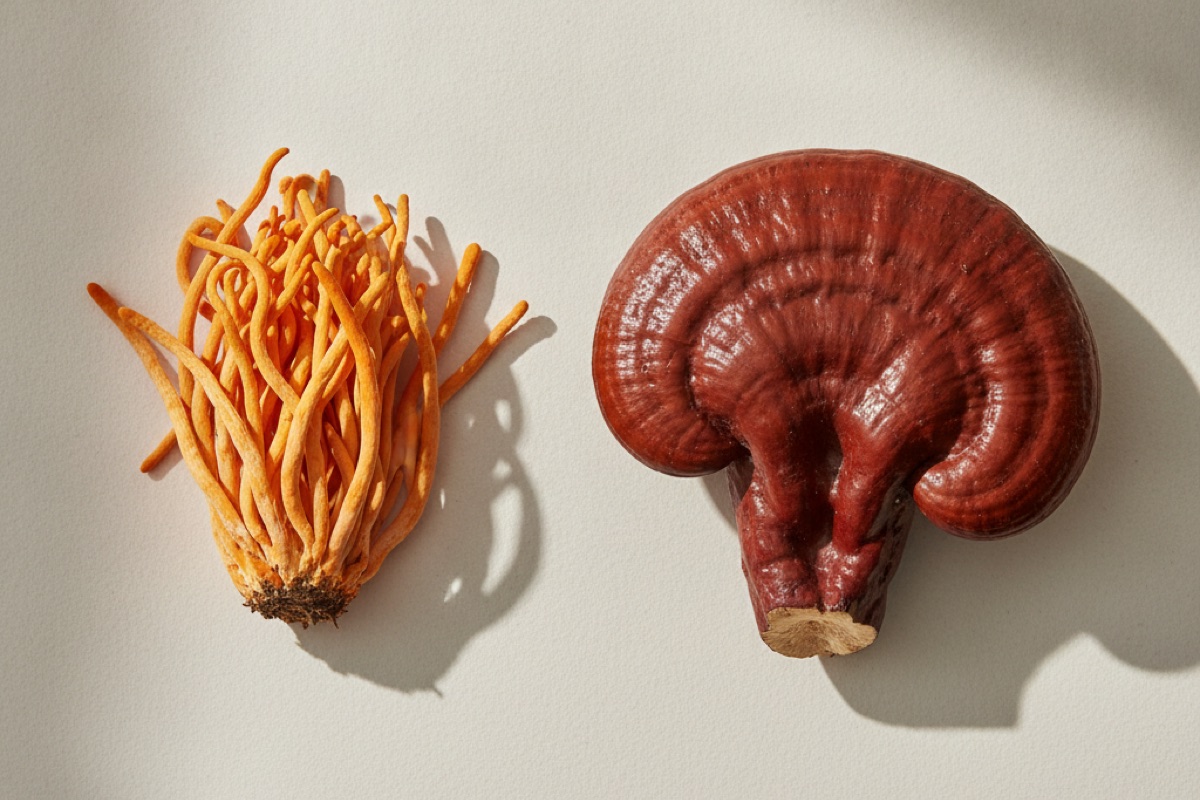
Cordyceps and reishi (also called lingzhi) are two of the most respected mushrooms in traditional Chinese and Thai herbalism. They are often mentioned in the same breath, yet they pull in almost opposite directions: one lifts your energy, the other calms and steadies you. This guide compares them so you can choose the right adaptogenic mushroom, or decide to use both.
Cordyceps vs reishi: the quick answer
If you want a natural boost in stamina, drive and physical energy, cordyceps is usually the better fit. If you want to feel calmer, sleep better and support long-term immunity, reishi (lingzhi) is the classic choice. Many people who understand both end up rotating or combining them, using cordyceps for daytime energy and reishi for evening calm.
What is cordyceps?
Cordyceps is a high-altitude medicinal fungus traditionally prized for restoring vitality after illness or exhaustion. It is thought to support the body's production of ATP, the fuel your muscles use, and to improve how efficiently you use oxygen during activity. That is why it has a reputation as an energising, performance-supporting mushroom, popular with active people and anyone whose stamina has dipped.
What is reishi (lingzhi)?
Reishi, known in China as lingzhi or the "mushroom of immortality," has been used for more than two thousand years to promote calm, resilience and longevity. It is a classic shen tonic in Chinese medicine, meaning it is used to settle the mind and spirit. Rich in beta-glucans and triterpenes, reishi is best known today for supporting a balanced immune response, relaxation and restful sleep.
Energy vs calm: the key difference
The clearest way to separate the two is by what they do to your nervous system and energy.
- Cordyceps leans stimulating and warming. It supports physical stamina, oxygen use and daytime drive, so it is best taken in the morning or before activity.
- Reishi leans calming and grounding. It supports relaxation, stress resilience and immune balance, so it is often taken in the afternoon or evening.
Think of cordyceps as the accelerator and reishi as the suspension: one gives you more to give, the other helps you handle the road smoothly.
Uses at a glance
Reach for cordyceps when you want
- More stamina for exercise, work or travel
- Support for physical energy and endurance
- A morning or pre-workout herbal lift
- Traditional support for vitality and libido
Reach for reishi (lingzhi) when you want
- A calmer, more even mood under stress
- Support for immune balance through the seasons
- Help winding down for restful sleep
- A gentle long-term wellbeing tonic
Who each mushroom suits
Cordyceps tends to suit busy, active people, those recovering their get-up-and-go, and anyone who feels flat or fatigued during the day. Because it is energising, sensitive people may prefer to avoid it late in the evening.
Reishi tends to suit people who feel wired, stressed or run down, those who want steady immune support, and anyone who struggles to switch off at night. Its calming nature makes it a natural evening companion rather than a pre-workout herb.
How to combine cordyceps and reishi
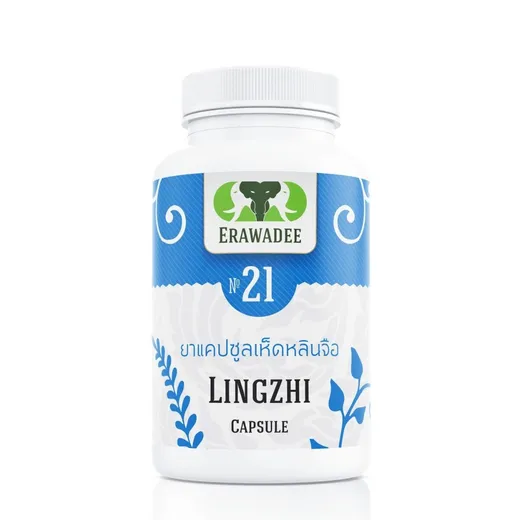
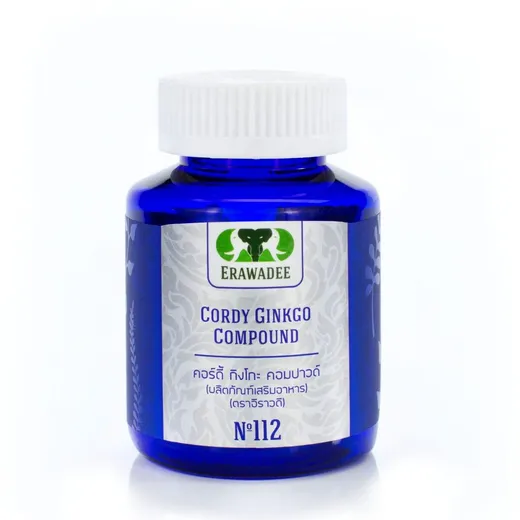
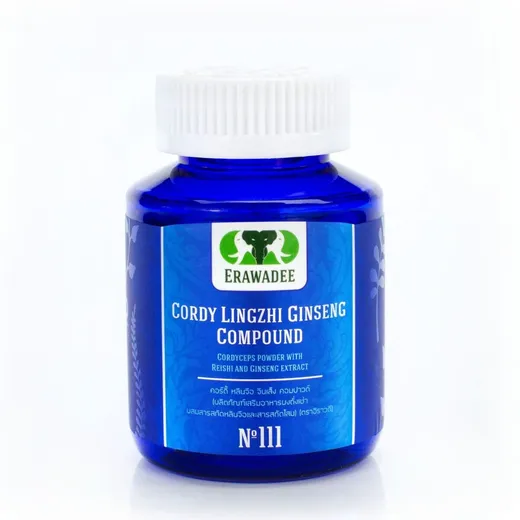
These two mushrooms are complementary, not competing, and traditional formulas often blend them. A simple approach is cordyceps in the morning for energy and reishi in the evening to unwind. Erawadee makes this easy with ready-made Thai herbal compounds. No.112 Cordyceps & Ginkgo pairs cordyceps with ginkgo for daytime stamina and clear focus, while No.111 Cordy Lingzhi Ginseng brings cordyceps, lingzhi and ginseng together for balanced energy and resilience in one formula. If you prefer reishi on its own for calm and immunity, No.21 Lingzhi Mushroom is a straightforward single-herb option.
Dosage and precautions
Both mushrooms are usually taken in the range of about 1 to 3 grams of extract per day with food, and both are generally well tolerated. Start low, stay consistent for several weeks, and follow your product's directions. As a precaution, avoid both during pregnancy and breastfeeding. Reishi may add to the effect of blood-thinning or blood-pressure medication, and cordyceps may affect blood sugar, so check with your doctor if you take medication, have an autoimmune condition, or are scheduled for surgery.
Herbal supplements support general wellbeing and are not a substitute for professional medical advice, diagnosis or treatment.
Frequently asked questions
Is cordyceps or reishi better for energy?
Cordyceps is the better choice for energy and stamina. Reishi is calming rather than stimulating, so it is chosen for relaxation, sleep and immune balance instead.
Can I take cordyceps and reishi together?
Yes. They are complementary, and many people take cordyceps in the morning for energy and reishi in the evening to unwind. Compound formulas that combine them are also widely used.
Is reishi good for sleep and stress?
Reishi is traditionally used to calm the mind, support stress resilience and encourage restful sleep, which is why it is often taken in the afternoon or evening.
Which mushroom is better for immunity?
Reishi is the classic immune-support mushroom thanks to its beta-glucans and triterpenes. Cordyceps is used more for energy and stamina, though both support overall wellbeing.
When should I take each one?
Take cordyceps in the morning or before activity for its energising effect, and reishi in the afternoon or evening for its calming, grounding effect.