Cordyceps: 6 Science-Informed Benefits, Uses & Dosage

Cordyceps is a prized medicinal mushroom that grows in the high mountains of Asia and has been used in traditional Chinese and Thai herbal practice for centuries to support energy, stamina and healthy ageing. Modern research is now catching up with what herbalists have long observed.
What is cordyceps?
Cordyceps is a genus of parasitic fungi that grows on insect larvae in cold, high-altitude regions. Wild Cordyceps sinensis is famously scarce and costly, so most supplements today use cultivated Cordyceps militaris, which delivers the same active compounds without harvesting from the wild. The dried fungus has been collected for generations and used in traditional medicine to fight fatigue, support the kidneys and restore vitality.
Of the more than 400 known species, only these two are the focus of most health research. Much of that research is still in animals or the lab, so experts are cautious about firm conclusions in humans, but the early findings are genuinely promising.
Cordyceps benefits
Here are the traditional uses and evidence-informed reasons cordyceps has become one of the most popular adaptogenic mushrooms.
May support exercise stamina and energy
Cordyceps is thought to raise the body's production of ATP, the molecule that delivers energy to muscles, and to improve how efficiently your body uses oxygen during activity. In small studies, older adults taking a cordyceps preparation improved measures of exercise performance such as VO2 max. This is why cordyceps is popular with people looking for a natural lift in daily stamina, though it appears less useful for already highly trained athletes.
Rich in antioxidants and traditionally used for healthy ageing
Older adults have long used cordyceps to reduce tiredness and support strength and libido. Researchers believe its antioxidant content helps explain this reputation, since antioxidants neutralise the free radicals linked to cellular ageing. Animal studies have reported improvements in memory and longevity, although the same effects have not yet been confirmed in people.
May help balance blood sugar
Cordyceps contains a special type of sugar that, in animal studies, appears to mimic some of the action of insulin and help keep blood sugar within a healthy range. Some evidence also points to support for kidney function, a common concern in people managing blood sugar. Human evidence is still limited, so this remains a traditional and research-stage use rather than a proven treatment.
Traditionally used for heart and circulation
In China, cordyceps is officially approved as a supportive remedy for certain heart rhythm concerns. Animal research links its adenosine content to protective effects on the heart, and suggests it may help support healthy cholesterol and triglyceride levels. As with other benefits, robust human data is not yet available.
May help calm inflammation
Laboratory work shows that cordyceps can dampen the proteins that drive excess inflammation in the body. Because long-term inflammation is tied to many chronic conditions, researchers are interested in cordyceps as a gentle, supportive anti-inflammatory. Studies in mice suggest benefits for airway and skin inflammation, but these effects have not yet been observed in humans.
How to take cordyceps and dosage
Most modern studies have used around 1 to 3 grams of cordyceps extract per day, taken with food, and this range is widely considered well tolerated. Capsules and compound formulas make daily use simple. If you are new to it, start at the lower end and take it consistently for several weeks, since adaptogens tend to work gradually rather than instantly. Morning or pre-activity is a natural time to take an energy-supporting mushroom.
Side effects and who should avoid it
Cordyceps is generally well tolerated, with occasional mild digestive upset reported. As a precaution, it is best avoided during pregnancy and breastfeeding due to a lack of safety data. If you take medication for blood sugar, blood pressure or blood thinning, or have an autoimmune condition, speak with your doctor first, as cordyceps may add to those effects. Anyone scheduled for surgery should pause supplements beforehand.
Erawadee cordyceps compounds
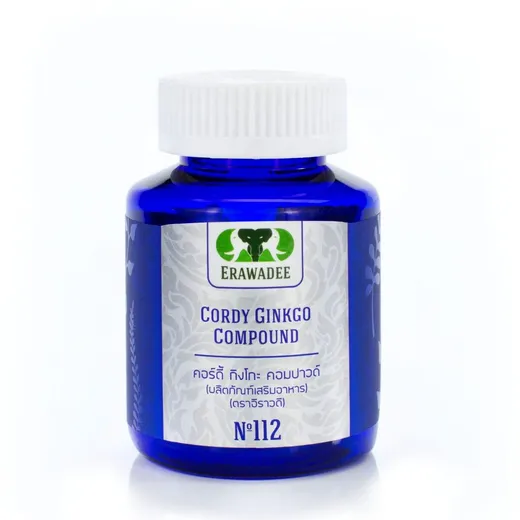
Erawadee pairs cordyceps with complementary Thai herbs so each formula does more than a single ingredient could alone. No.112 Cordyceps & Ginkgo combines cordyceps with ginkgo to support circulation and clear, energised focus, while No.111 Cordy Lingzhi Ginseng blends cordyceps with lingzhi (reishi) and ginseng for balanced stamina and everyday resilience. Both are made from carefully sourced, dried herbs and offered in convenient capsules.
Herbal supplements support general wellbeing and are not a substitute for professional medical advice, diagnosis or treatment.
Frequently asked questions
What are the main benefits of cordyceps?
Cordyceps is traditionally valued for supporting energy, exercise stamina and healthy ageing, and is rich in antioxidants. Research also explores its role in blood-sugar balance, heart health and calming inflammation, though most evidence is still early.
How much cordyceps should I take per day?
Studies typically use about 1 to 3 grams of cordyceps extract daily with food. Start low, stay consistent for a few weeks, and follow the directions on your chosen product.
Does cordyceps have side effects?
It is generally well tolerated. Mild digestive upset is the most commonly reported effect. If it occurs, lower the dose or take it with a meal.
Who should avoid cordyceps?
Avoid during pregnancy and breastfeeding, and check with your doctor if you take medication for blood sugar, blood pressure or clotting, have an autoimmune condition, or are due for surgery.
When is the best time to take cordyceps?
Many people take it in the morning or before physical activity, since it is traditionally used to support energy and stamina.