Butterfly Pea Flower: Benefits, Tea & Hair Care Uses
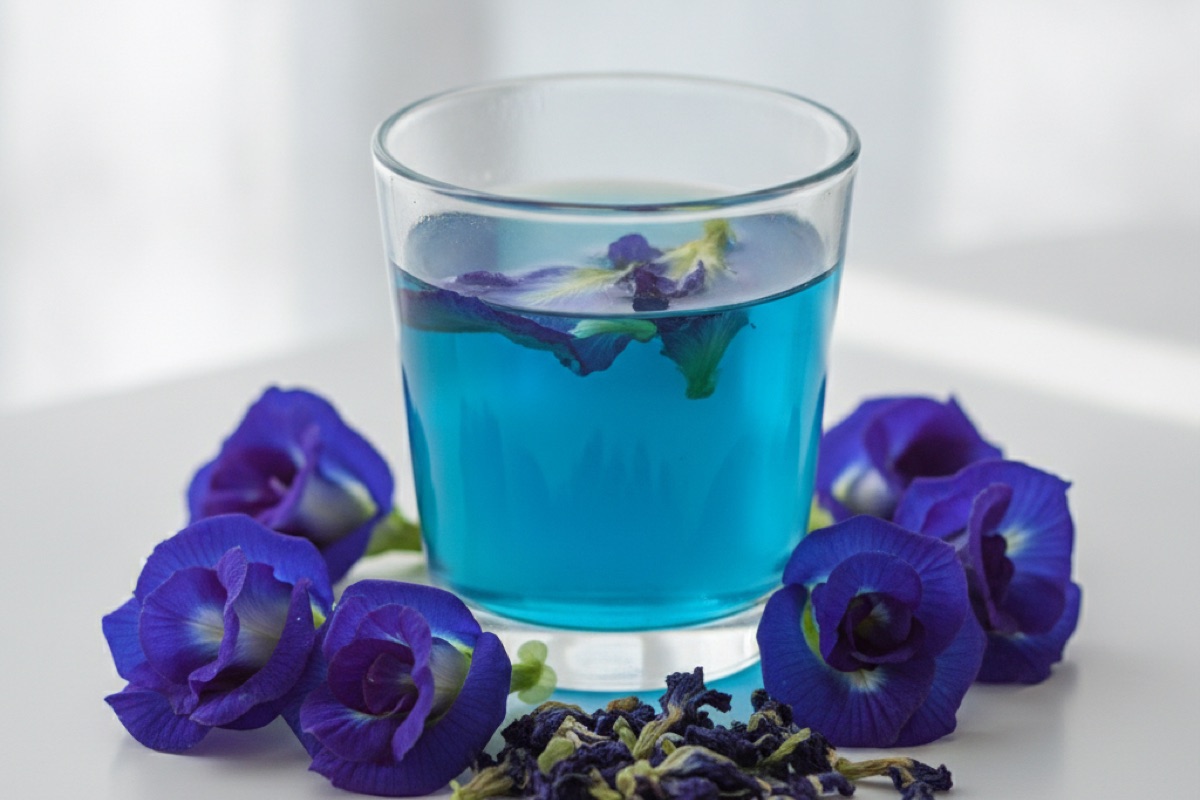
Butterfly pea flower (Clitoria ternatea) is the vivid indigo-blue bloom that turns Thai and Southeast Asian kitchens and beauty rituals a striking shade of blue. Long brewed as a caffeine-free herbal tea and used to strengthen hair, it is prized today for its rich store of plant antioxidants.
What is butterfly pea flower?
Butterfly pea is a climbing legume native to tropical Asia, known in Thailand as anchan and across the Malay world as bunga telang. Its deep-blue petals have been used for centuries as a natural food colour, a soothing evening drink, and a folk remedy for hair and skin. The same pigments that give the flower its colour are what make it interesting to modern herbalists.
Antioxidants: the anthocyanins behind the blue
That unmistakable colour comes from anthocyanins and related flavonoids — the same family of plant antioxidants found in blueberries and red cabbage. Antioxidants help the body neutralise free radicals, the reactive molecules linked to everyday oxidative stress. A cup of butterfly pea tea is an easy, calorie-free way to enjoy these compounds.
- Anthocyanins — the blue pigment and primary antioxidant.
- Flavonoids and phenolic acids — may support the body's natural defences.
- Caffeine-free — suitable for the evening.
The colour-changing tea
Butterfly pea tea is famous for a little kitchen magic: it brews a deep blue, then shifts to purple and pink the moment you add lemon or lime. The pigments are pH-sensitive, so a squeeze of citrus visibly changes the colour. It makes a beautiful, naturally coloured drink with a mild, earthy taste — lovely hot or iced.
Benefits people look for
Hair health
In Thai tradition, butterfly pea is the classic flower for hair. It is used to help keep strands looking strong, glossy and dark, which is why it appears both in a drinkable tea and in dedicated hair care.
Antioxidant support
The anthocyanins may help support the body against oxidative stress as part of an antioxidant-rich diet.
Calm and everyday wellbeing
A warm, caffeine-free cup is a gentle way to wind down in the evening and stay hydrated.
Skin
Flavonoid-rich botanicals are widely used in traditional skincare, and butterfly pea features in many natural beauty routines for a fresh, cared-for look.
How to use butterfly pea
As a tea
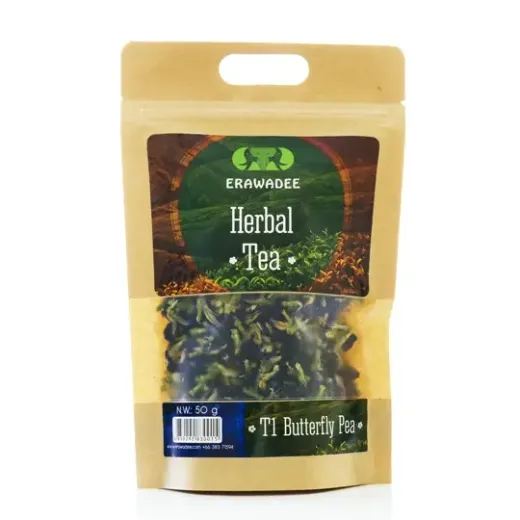
Steep a few dried flowers or a teaspoon of loose blooms in hot (not boiling) water for 3–5 minutes until vividly blue. Add honey and a squeeze of lemon to turn it purple. Our T1 Butterfly Pea Herbal Tea (Hair Improvement) is a caffeine-free blend you can enjoy daily, hot or iced.
As a hair care ritual
For a simple weekly ritual, wash with Shampoo Butterfly Pea, then smooth Conditioner Butterfly Pea through mid-lengths and ends, leave for a couple of minutes and rinse. Many people also cool a strong brew of the tea and use it as a final hair rinse.
In the kitchen and Thai tradition
Beyond the teapot, butterfly pea is a beloved natural food colour across Thailand, Malaysia and Indonesia. Cooks use the blue infusion to tint sticky rice, dumplings and desserts, and it is the signature colour behind dishes like blue rice. Because the colour comes from real flowers rather than synthetic dye, it is a gentle way to add a little wonder to drinks, jellies, rice and baking — and children love watching the colour shift when lemon is added.
Traditionally the flower was also brewed as a calming evening infusion and used in home hair and scalp treatments, passed down through generations. That same heritage lives on in modern butterfly pea tea and hair products.
How Erawadee makes it
Erawadee works with Thai growers to harvest the flowers and dry them gently so the blue anthocyanin pigment — and its antioxidant value — is preserved. The dried blooms go into our caffeine-free tea, while a concentrated flower extract is blended into the matching shampoo and conditioner. Choosing a single-origin Thai flower means you get a clean, vivid product with nothing unnecessary added.
Precautions
Butterfly pea flower is widely enjoyed as a food and beverage and is generally well tolerated. As with any botanical, a few sensible cautions apply:
- Introduce it gradually and stop if you notice any sensitivity.
- If you are pregnant, breastfeeding, or taking prescription medication, check with your doctor first.
- Keep the tea as one part of a varied, balanced diet.
Herbal teas and botanicals support everyday wellbeing and are not a substitute for professional medical advice.
Frequently asked questions
What are the benefits of butterfly pea flower?
It is a caffeine-free source of anthocyanin antioxidants, traditionally used in Thailand to support strong, glossy hair and enjoyed as a calming evening drink.
What does butterfly pea tea taste like?
Mild and gently earthy, a little like a light green tea. It is naturally deep blue and turns purple or pink when you add lemon or lime.
Is butterfly pea good for hair?
Yes — it is the classic Thai flower for hair care, used in both tea and dedicated shampoo and conditioner to help hair look strong and shiny.
Does butterfly pea have caffeine?
No. It is naturally caffeine-free, which makes it a good choice for the afternoon or evening.
Are there any side effects?
It is generally well tolerated. Introduce it slowly, and if you are pregnant, breastfeeding or on medication, ask your doctor before making it a regular habit.