7 Best Thai & Herbal Remedies for Women's Health & Hormonal Balance
For centuries, women across Thailand, India and Southeast Asia have turned to plants to support hormonal balance, skin, mood and vitality through every stage of life. Below are seven of the most respected herbs for women's wellbeing — with an honest look at how they may help and who should be careful.
How to choose the right herb for you
There is no single "best" herb for every woman. The right choice depends on your stage of life and your goal — easing menopausal symptoms, smoothing out an irregular cycle, calming PMS, or simply supporting skin and energy. Broadly, the herbs below fall into two camps: phytoestrogen herbs such as Pueraria mirifica and Kwao Krua that mimic the body's own estrogen, and gentler tonics and adaptogens such as Shatavari, Vitex and Centella that nudge balance more subtly. If you take medication or have a hormone-sensitive condition, read the precautions section carefully before starting any of them.
1. Pueraria mirifica (White Kwao Krua)
Perhaps the most famous women's herb from Thailand, Pueraria mirifica is rich in natural phytoestrogens. Traditionally it has been used to support skin firmness, breast tissue and the comfort of perimenopause and menopause. Because it is strongly estrogenic, it deserves respect — see the precautions below. Erawadee offers it both as a supplement, No.36 Kwao Krue Khao, and as a topical Pueraria Mirifica Face Cream for mature skin.
2. Red Kwao Krua (Kwao Krue Dang)
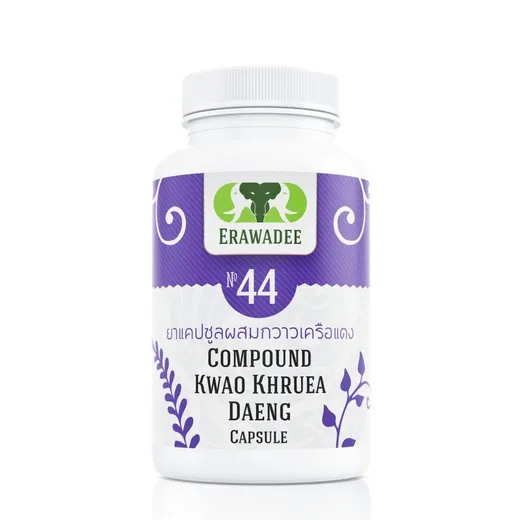
The red variety, No.44 Kwao Krue Dang, is a traditional Thai tonic used for circulation, energy and vitality. It is often combined with white Kwao Krua in classic women's blends. As with all Kwao Krua herbs, it acts on the body's hormonal balance, so start gently and follow the cautions below.
3. Shatavari (Asparagus racemosus)
Known in Ayurveda as the "queen of herbs" for women, Shatavari is a cooling, nourishing adaptogen. It is traditionally used to support the reproductive system, lactation, and a steady mood through hormonal shifts. It is often chosen by women who prefer a gentler, tonifying herb rather than a strong phytoestrogen.
4. Centella asiatica (Gotu Kola / Bua Bok)
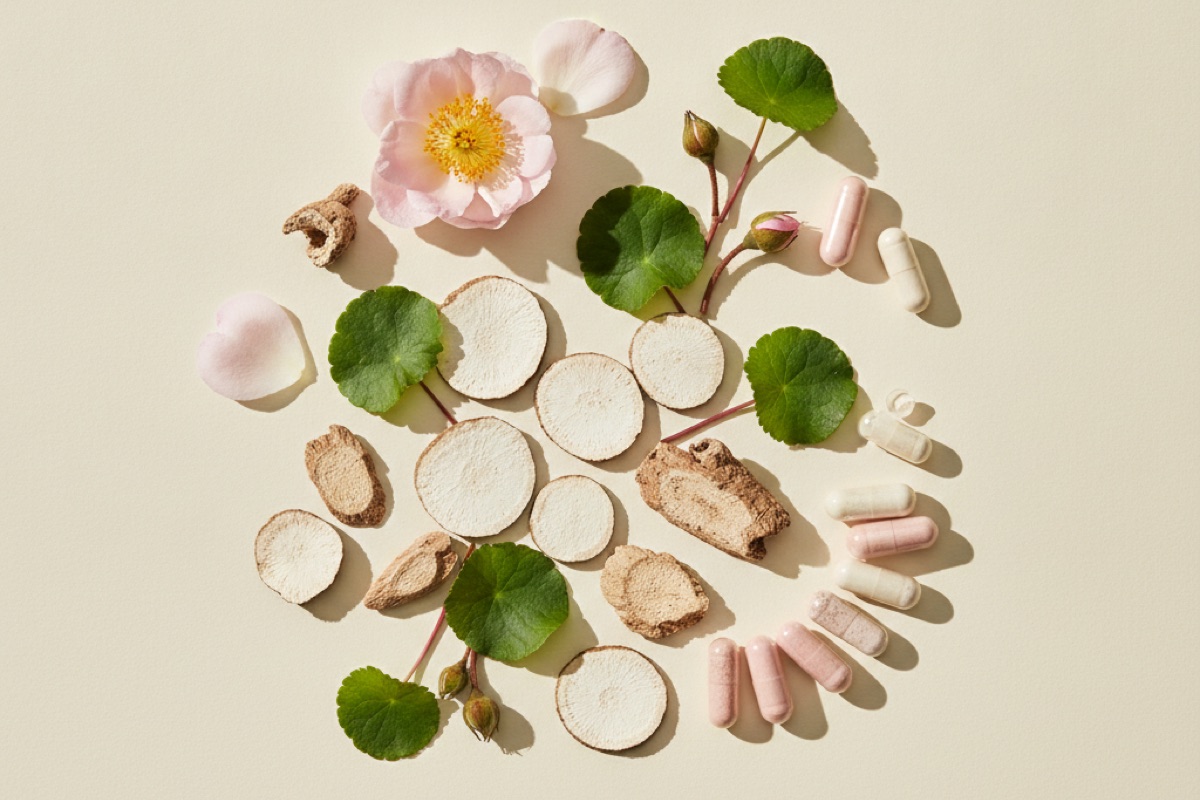
A staple of Thai and Ayurvedic tradition, Centella asiatica supports skin repair, collagen and calm focus. Women value it for its role in skin elasticity and for easing everyday stress — an underrated part of hormonal wellbeing.
5. Black Cohosh
Widely researched for menopausal comfort, Black Cohosh is traditionally used to ease hot flushes and night sweats. Unlike phytoestrogen herbs, it is thought to work through different pathways, making it a popular option for those seeking non-estrogenic support. Discuss it with your doctor if you have liver concerns.
6. Chaste Tree Berry (Vitex)
Vitex agnus-castus is one of the best-known herbs for cycle regularity and premenstrual comfort. It is traditionally used to support progesterone balance and ease PMS-related mood and breast tenderness. It is usually taken over several cycles to notice its full effect.
7. Turmeric (Curcuma / Kamin Chan)
Thailand's beloved turmeric is prized for its antioxidant, anti-inflammatory support. For women it complements a hormonal-balance routine by supporting healthy skin, comfortable cycles and general resilience.
Phytoestrogen and pregnancy precautions
Several of these herbs are powerful, so please choose with care:
- Pregnancy and breastfeeding: avoid Pueraria mirifica, both Kwao Krua types, Vitex and Black Cohosh unless a doctor advises otherwise.
- Hormone-sensitive conditions: if you have or have had breast, uterine or ovarian cancer, endometriosis or fibroids, avoid phytoestrogen herbs (Pueraria mirifica, Kwao Krua) and consult your doctor.
- Medication interactions: phytoestrogens may interfere with hormonal contraceptives, hormone therapy and tamoxifen. Vitex may interact with dopaminergic medicines.
- Start low: introduce one herb at a time so you can judge how your body responds.
Herbal supplements support wellbeing and are not a substitute for professional medical advice.
Frequently asked questions
Which herb is best for hormonal balance?
It depends on your goal. Pueraria mirifica and Kwao Krua are strong phytoestrogens suited to menopause support, Shatavari and Vitex are gentler options for cycle and mood, and Black Cohosh is popular for hot flushes.
Is Pueraria mirifica safe to take?
For many healthy women it is well tolerated in modest amounts, but because it is strongly estrogenic it should be avoided in pregnancy and in hormone-sensitive conditions. Speak to your doctor first.
Can these herbs help with menopause?
Several — including Pueraria mirifica, Black Cohosh and Shatavari — are traditionally used to ease menopausal discomfort such as hot flushes and dryness. They support wellbeing rather than replace medical treatment.
Can I take women's herbs while pregnant?
No — avoid phytoestrogen and hormone-active herbs like Pueraria mirifica, Kwao Krua, Vitex and Black Cohosh during pregnancy and breastfeeding unless your doctor specifically approves.
How long until herbs for hormonal balance work?
Gentle tonics like Shatavari and Vitex are usually taken over several weeks to a few cycles before their full effect is noticeable. Consistency matters more than dose.